
Why Golf Swing Advice Doesn't Fix The Wrong Clubs
Golfers have never had more access to advice. A quick search can produce hundreds of videos explaining how to hit a driver farther, strike irons more consistently, eliminate a slice or improve putting. Golf magazines, instructors, equipment manufacturers and social media creators offer an almost endless supply of tips designed to help players improve. Much of this advice is genuinely useful, and some of it can make a noticeable difference when applied in the right circumstances.
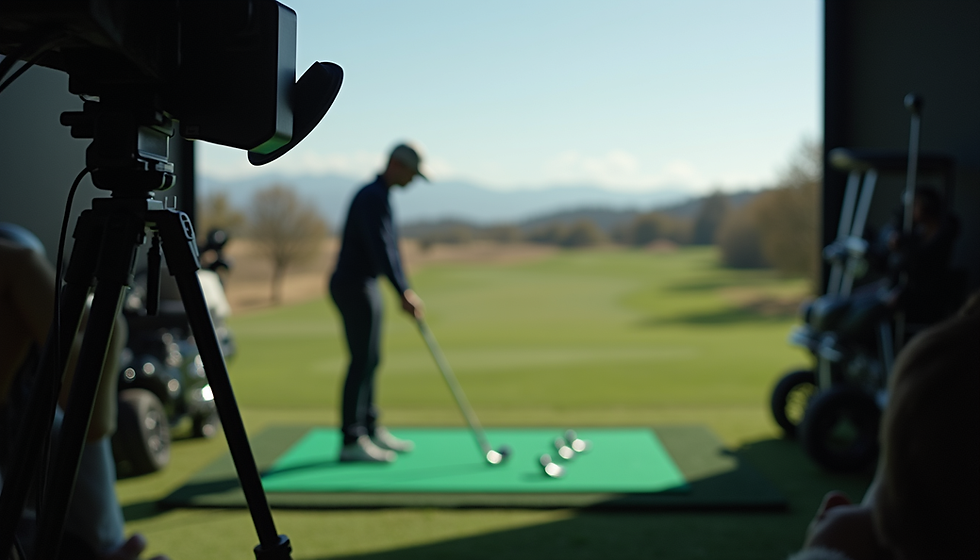
Yet many golfers find themselves moving from one tip to another without making lasting progress. They try a new grip, change their takeaway, experiment with a different swing path and adjust their stance, only to discover that the original problem remains or a new one has appeared. They may even feel that their game has become less consistent because they are trying to incorporate too many different ideas at once.
The problem is not necessarily that the advice is bad. It may be that the advice was never designed for them. Golfers have different bodies, swings, equipment, experience levels and goals. A recommendation that helps one player can be ineffective, unnecessary or even counterproductive for another. The challenge is no longer finding golf advice. It is determining which advice deserves your attention.
The same symptom can have different causes
Consider a golfer who regularly slices the driver. The most common response is to search for ways to correct the slice, and there is no shortage of instruction available. One video might recommend changing the grip, another might focus on the club path, and a third might explain how to improve the clubface position at impact.
Any of those adjustments could be relevant, depending on what is happening during the swing. But the visible result alone does not establish the cause. A ball curving significantly to the right for a right-handed golfer can reflect a relationship between clubface direction and swing path, while the starting direction provides additional information about the delivery. Equipment characteristics, strike location and the golfer's ability to repeat a movement can also affect the outcome.
If the golfer changes their grip without understanding the underlying problem, the result may be an improvement, no meaningful difference or an entirely new miss. The lesson is simple: identifying a problem is not the same as diagnosing it. Before deciding what to change, you need enough information to understand what is producing the result.
Golf advice often assumes you are an average golfer
General advice has an important role in golf. It introduces concepts, explains fundamentals and gives players a starting point when they do not know where to begin. The limitation is that broad recommendations cannot account for every individual circumstance.
Take the advice to swing faster to gain distance. For some golfers, improving speed may be a useful objective. For others, more speed without better contact and control could increase dispersion without producing a meaningful improvement in usable distance. A golfer who struggles to find the centre of the clubface may benefit more from improving strike quality than from trying to generate additional speed.
The same principle applies to equipment. A recommendation to use a particular shaft flex, driver loft or golf ball may be reasonable for one player but unsuitable for another with a different delivery, launch pattern or performance goal. Even handicap is an incomplete guide because golfers with similar scores can have very different strengths and weaknesses.
Good advice needs context. Without it, golfers are left trying to decide whether a recommendation applies to them, often by experimenting and hoping for the best.
More information can make improvement harder
It seems logical that access to more information should make golfers better. If you can learn about every part of the swing, compare dozens of equipment options and study the techniques used by elite players, surely you should be able to make better decisions.
In practice, an abundance of advice can create a different problem. Golfers may encounter several recommendations that appear equally convincing but point in different directions. One instructor emphasizes a particular movement, while another advocates a different approach. A club review praises a product that performs well for its reviewer, but provides little evidence about whether it will suit your swing. A training plan promises improvement but assumes you have time to practice several times a week.
Without a clear understanding of your own game, it becomes difficult to distinguish a useful recommendation from a distraction. Golfers can end up changing too many things, abandoning adjustments before they have been properly evaluated or spending time on problems that have little influence on their scores. More information is not automatically more useful. What matters is whether it helps you make a better decision.
Your goal should determine the advice you follow
There is another reason generic golf advice can miss the mark: golfers do not all want the same thing from the game.
One player wants to break 100 for the first time. Another is trying to reach a single-digit handicap. A third wants to hit the driver farther, while someone else simply wants to enjoy a weekend round without losing several balls. These are different objectives, and they may call for different approaches.
A golfer focused on breaking 100 might benefit most from reducing penalty strokes, choosing safer targets and developing reliable basic shots. A player already scoring in the low 80s may need more detailed work on approach dispersion, wedge distances or putting performance. Someone who wants additional distance may need to examine speed, strike, launch conditions and equipment rather than follow a generic instruction to swing harder.
There is no single definition of improvement that applies equally to everyone. Advice becomes more valuable when it is connected to a specific goal, the golfer's current ability and the amount of time they can realistically devote to practice.
AI can help make golf advice personal
This is where AI has the potential to change the experience of learning golf. Rather than treating every question as an isolated request for a tip, an AI golf platform can use information about an individual golfer to make its guidance more relevant.
Imagine asking why you struggle with longer approach shots. A generic answer might recommend improving your long-iron technique or replacing a difficult club with a hybrid. A more personalized discussion can begin with your actual distances, the clubs in your bag, your common misses, your strike consistency and the situations in which the problem occurs. Those details help narrow the possibilities and identify what might be worth testing.
The advantage is not that AI automatically knows the correct answer. Its recommendations are only as reliable as the information available, and important technical questions may still require launch-monitor measurements or assessment by a qualified instructor or fitter. The opportunity is that AI can help organize the information, ask relevant follow-up questions and connect advice to the golfer's circumstances instead of treating every player as interchangeable.
For an everyday golfer, that can make the process of deciding what to do next considerably less confusing.
The right answer may be to change nothing
One of the most overlooked aspects of golf improvement is recognizing when a change is unnecessary. Golfers are constantly exposed to new techniques, products and training ideas, which can create the impression that every weakness demands an immediate adjustment.
But a shot that occasionally goes wrong does not always indicate a fundamental problem. Even skilled players produce poor shots, and natural variation is part of golf. Changing a reliable swing because of one bad round can introduce uncertainty where none was needed. Buying new equipment without identifying a specific limitation can also consume money without solving anything important.
A more disciplined approach begins by establishing what is actually happening. Is the problem frequent enough to matter? Does it consistently affect performance? Is there evidence pointing toward a particular cause? Would a change address that cause, and how would you know if the change worked?
Sometimes the right decision will be to make an adjustment. Sometimes it will be to practice a specific skill. Sometimes it will be to keep doing what you are doing and focus elsewhere. Knowing the difference is an important part of becoming a more effective golfer.
Turn advice into something you can test
A useful recommendation should lead to a clear next step, not simply another idea to remember. If you decide to work on a particular part of your game, establish what you are trying to improve and how you will evaluate the result.
For example, if your goal is to improve driver accuracy, you might record the direction and severity of your misses over several rounds rather than judging success by one good range session. If you are testing a different club, compare its reliable carry distance, dispersion and usefulness in real playing conditions. If you introduce a new practice drill, understand the skill it is intended to develop and look for evidence that the skill is transferring to the course.
This does not require a professional-level data system. Even simple, consistent observations can help distinguish genuine improvement from a temporary good day. The important part is to avoid changing several variables at once, because that makes it much harder to determine which adjustment actually helped.
Golfers who treat advice as something to evaluate, rather than something to accept automatically, can make more informed decisions about their game.
The big brain in golf starts with understanding you
The promise of AI in golf is not simply that it can generate an endless supply of tips. Golfers already have more tips than they could ever use. Its greater potential is to help make those tips relevant.
By bringing together a golfer's physical profile, current equipment, performance information and goals, golfgaim can help connect fitting recommendations with practice and improvement. Instead of starting with a generic question about what golfers should do, the process can begin with a more useful one: what makes sense for this golfer, given the information available?
That distinction can help everyday players move away from guesswork. It gives them a way to explore why a problem might be happening, what information could clarify it and which next step is worth considering. It can also help them recognize when a familiar piece of advice does not fit their circumstances.
Golf improvement will always involve experimentation, practice and occasional setbacks. No technology can remove the need to learn how to play. But golfers do not have to approach every decision by starting from scratch or trying whichever tip sounds most convincing.
The next time you come across a promising golf tip, do not ask only whether it works. Ask who it works for, what problem it solves and whether that problem is actually yours.
Because the best golf advice is not necessarily the most popular, the most sophisticated or the most widely shared. It is the advice that makes sense for your game.


Comments