Before You Buy Another Golf Club, Understand Your "Golf Fit"
There is a familiar moment in golf. A new driver appears in a television commercial, a playing partner shows up with a new set of irons or a golf magazine publishes its annual list of the year's best equipment. Suddenly, the clubs in your bag don't seem quite as good as they did the week before. You start wondering whether a few more yards off the tee, a little more forgiveness or a different shaft might be the missing ingredient in your game.
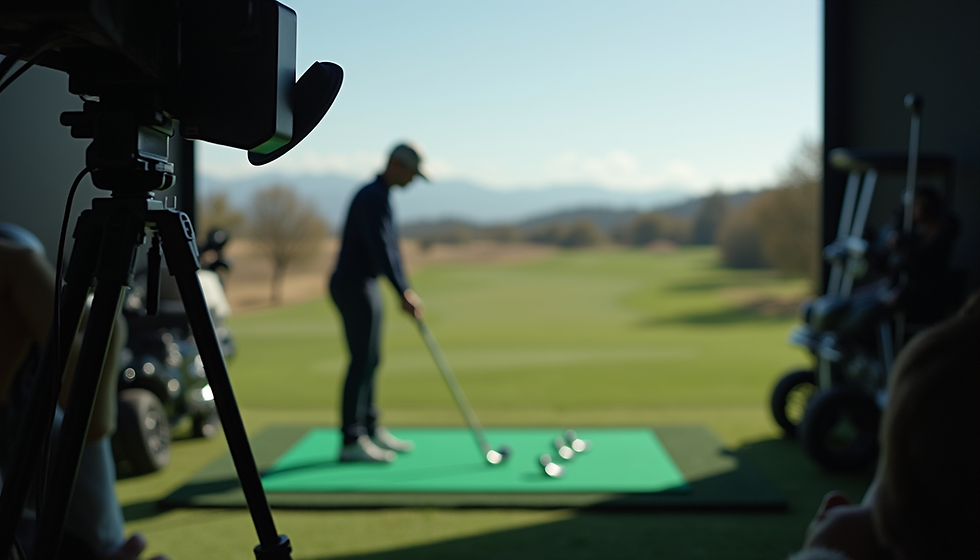
It is an understandable reaction. Golf equipment has become remarkably sophisticated, and the technology in modern clubs can make a real difference. The problem is not that golfers buy new equipment. The problem is that many golfers make equipment decisions without first understanding what their own game actually requires.
That distinction is becoming more important as artificial intelligence begins to change the way golfers can approach equipment. Instead of starting with the latest club and asking whether it might make you better, AI makes it possible to start with the golfer and ask a much more useful question: What equipment actually makes sense for me?
Golfers Often Start at the Wrong End
The traditional equipment-buying process tends to begin with the product. A golfer sees a new driver, reads about its technology and starts thinking about whether it could improve their game. The conversation quickly becomes about club heads, lofts, shafts, weights and adjustability.
Those things matter. But they are not necessarily where the decision should begin.
The more important questions come first. How fast do you swing? What is your normal ball flight? Where do you miss? How consistently do you strike the ball? What distances are you trying to achieve? What clubs are currently creating problems? What are the strengths of your game, and where are you losing shots?
Until those questions have been considered, choosing between one club and another is often little more than educated guesswork.
The Most Expensive Club Isn't Always the Best Investment
Golfers sometimes assume that better equipment automatically means better performance. If the newest driver is more expensive than the previous generation, it must be better. If a professional uses a particular shaft, it must be a better shaft. If a friend gained 15 yards after changing irons, the same thing should happen to you.
Golf doesn't work that way.
A club is only useful to the extent that it works for the golfer holding it. A driver that produces ideal launch and spin for one swing may produce very different results for another. A shaft that feels stable to one player may feel too heavy or too stiff for someone else. An iron designed to maximize distance may not be the best choice for a golfer who needs more predictable trajectories and distance control.
The question isn't whether a product is good.
The question is whether it is good for you.
Your Handicap Doesn't Tell the Whole Story
Handicap is useful because it provides a general measure of playing ability. But it is a surprisingly poor description of an individual golfer's equipment needs.
Two golfers with a 12 handicap can have completely different games. One might be an excellent driver who struggles around the green. Another might hit accurate irons but lose shots off the tee. One may generate significant clubhead speed with a relatively aggressive transition, while another may have a slower tempo and rely more heavily on consistency.
Treating both golfers as though they should use the same equipment simply because they have the same handicap misses the point.
The more useful fitting process looks beyond the number on the scorecard.
Your Miss May Be More Important Than Your Best Shot
Golfers naturally focus on their best shots when describing their game. They talk about the drive they hit 270 yards or the seven-iron they flushed to six feet.
But equipment fitting often becomes more useful when you examine what happens when things go wrong.
What is your common miss?
Do you tend to pull the ball left? Push it right? Hit it high and short? Hit it low? Strike it toward the heel or toe? Lose control when you swing harder?
Your common miss tells a story.
It can help identify characteristics of your equipment that may be contributing to inconsistency, or at least show where a fitting should concentrate its attention. A golfer's best shot tells you what is possible. Their typical miss tells you what they need help managing.
This Is Where AI Has an Interesting Advantage
The power of AI isn't that it knows what the newest golf club is. Golfers can find that information almost anywhere.
The interesting part is what happens when the technology can combine product information with information about the individual golfer.
Your physical profile can be considered alongside your swing characteristics. Your swing can be considered alongside your current equipment. Your equipment can be considered alongside your performance. Your strengths and weaknesses can be considered alongside your goals.
The result is a much more complete problem to solve.
Instead of asking, "Which driver is best?" the system can begin asking, "Given everything we know about this golfer, which driver characteristics are most likely to make sense?"
That is a much more sophisticated question.
AI Doesn't Have to Guess What You Need
There is an important misconception about AI fitting. Some people hear the term and assume it means an algorithm simply chooses a club from a database.
That's not the interesting part.
The value comes from the reasoning behind the recommendation. If a golfer receives a recommendation, they should also understand why it was made. The recommendation should connect back to information about their game rather than simply repeating a manufacturer's description.
That makes the result much more useful.
Instead of saying a club is "forgiving" or "high launching," a personalized system should be able to explain why those characteristics matter for a particular golfer. The recommendation becomes less about marketing language and more about the individual's circumstances.
The Same Principle Applies Across the Bag
The driver gets most of the attention because it is usually the most visible club in the bag and the one associated with distance. But the same fitting logic applies to everything else.
Irons need to produce useful distance gaps and trajectories. Wedges need to provide predictable options around the green. A putter needs to suit the golfer's stroke and preferences. Grips need to fit the golfer's hands and provide a comfortable, repeatable connection with the club. Even the ball can influence how the golfer experiences the game.
There is no reason every golfer should approach those decisions independently.
The bag is a system.
The golfer is the center of that system.
Your Ball Is Part of the Fitting Too
The golf ball is an especially interesting example because golfers often choose it based on brand, price or what a professional happens to play.
But the ball interacts with the rest of the golfer's game. Distance, launch, spin and short-game performance can all influence whether a particular ball makes sense. A golfer who wants more driver distance may have different priorities from one who is primarily looking for predictable wedge performance.
Again, there isn't necessarily one best answer.
There is a best starting point for a particular golfer.
What If Your Equipment Isn't the Problem?
This may be one of the most valuable outcomes of a personalized fitting.
The answer might be that you don't need to replace your driver.
It might be that your current irons are perfectly reasonable for your game. It might be that changing your shaft isn't going to solve the problem you think it will. It might even be that the biggest opportunity isn't equipment at all.
That's useful information.
Golfers don't need technology that tells them to buy something every time they have a problem. They need technology that helps them understand the problem first.
Sometimes the smartest equipment decision is not to buy anything.
That Can Save More Than Money
Avoiding an unnecessary purchase is obviously valuable financially, but there is another benefit.
Changing equipment can introduce uncertainty.
A golfer who replaces their driver, irons and ball at the same time may have no idea which changes helped and which didn't. They may spend weeks adjusting to new equipment while trying to determine whether their scores are actually improving.
A more objective approach can help isolate the decisions.
Understand the golfer first. Identify the likely opportunity. Change what needs changing. Measure what happens.
That is a much more rational process than constantly searching for the next piece of equipment that might solve the problem.
Equipment and Improvement Should Work Together
The best equipment fitting shouldn't exist in isolation from the rest of the golfer's game.
Suppose a golfer receives a fitting recommendation that changes their iron configuration. That change should have implications for how they practice. New distances may require new targets. Different trajectories may change how the golfer approaches certain shots. A different wedge setup may create new scoring opportunities.
This is where AI becomes particularly interesting.
The same intelligence that helps determine what equipment might fit can also help determine what the golfer should work on. The fitting and the practice plan don't have to be two completely separate experiences.
They can inform each other.
Your Game Is Always Moving
Golfers aren't static.
A golfer can gain or lose swing speed. Their handicap can improve. Their swing can change. They can develop a different shot shape. They can become more consistent with one part of the game while another becomes a weakness.
Equipment needs can change with those developments.
That is why a personalized approach makes more sense as an ongoing process rather than a one-time event. The fitting that made sense two years ago may not be the fitting that makes sense today.
The more current the information, the more relevant the recommendation can be.
This Is Where golfgaim Comes In
This is the problem golfgaim is designed to address.
Instead of asking golfers to begin with a product, golfgaim begins with the golfer. You provide information about your physical profile, current equipment and golf game, and the system uses that information to create personalized equipment recommendations across the bag.
The idea is simple even though the analysis behind it isn't.
You don't have to know which driver you need. You don't have to understand every shaft option available. You don't need to spend hours comparing dozens of clubs online.
You start with yourself.
The Big Brain Does the Heavy Lifting
This is one of the most compelling aspects of AI in golf. The golfer doesn't need to become an expert in the technology.
The system can do the heavy analytical work and present the result in a way that is understandable and actionable. Instead of giving you a giant spreadsheet of club specifications, it can help narrow the decision down to what matters for your particular game.
That is what makes the technology potentially so powerful for everyday golfers.
The intelligence can be sophisticated without the experience being complicated.
Before You Buy, Ask a Better Question
The next time you see a new driver advertised as longer, straighter or more forgiving, there is nothing wrong with being interested. Golf equipment is fun, and trying new clubs is part of the enjoyment of the game.
But before reaching for your wallet, ask a different question.
What does my golf game actually need?
That question changes the entire process.
It moves the conversation away from the latest product and toward your performance. It makes the equipment serve the golfer rather than asking the golfer to adapt to the equipment.
And it opens the door to something much more useful than another equipment review.
A personalized answer.
The Future of Golf Fitting Is About the Golfer
For decades, golf equipment marketing has been largely product-driven. The newest technology arrives, golfers learn about it and the industry tries to convince them that this year's innovation might finally solve the problems that last year's innovation didn't.
The next generation of fitting has the opportunity to be different.
Instead of asking which product should be sold to the golfer, it can begin by asking what the golfer actually needs. Instead of relying primarily on handicap categories and generalized recommendations, it can consider a much broader picture of the individual.
AI makes that kind of personalization easier to deliver.
And for everyday golfers, that could be a significant change.
You Don't Need to Know Which Club You Need
That's the point.
You don't have to know which driver is right for you before you begin. You don't need to understand which shaft profile matches your swing or which iron head will produce the best combination of distance and control.
You need to understand your golf game.
Once you do that, the equipment decision becomes much easier.
Input your profile. Let the big brain analyze your game. See what actually fits.
Then go play.
Because the goal isn't to have the newest clubs in the bag.
The goal is to have the right clubs in your bag.


Comments